Jonty Rhodes believes the growing dominance of franchise-based T20 cricket could leave bilateral one-day internationals fighting for relevance, even as the 50-over World Cup ensures the format retains a place in the international calendar.



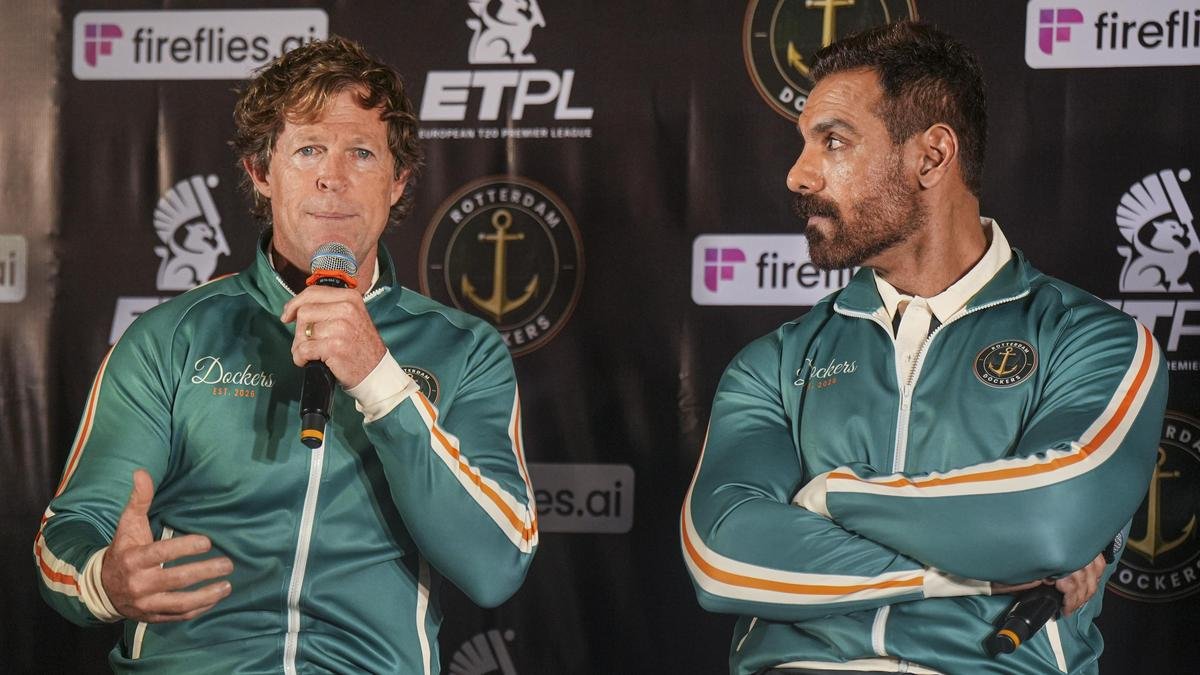
The former South African great, speaking on the sidelines of the jersey launch of Rotterdam Dockers, one of the franchises in the European T20 Premier League, said the proliferation of leagues could eventually force players to make difficult choices between international cricket and a lucrative franchise circuit.
“When T20 cricket first started… people were saying it was going to put pressure on Test cricket. Amazingly, it hasn’t,” Rhodes said. “For me, it was always understanding that 50-over cricket might be the one format where, because we are bringing in such a fresh crowd and a different perspective into the game, possibly 50-over cricket might be in trouble in the years ahead.”
ALSO READ | Afghanistan qualifies for ODI World Cup 2027
Rhodes, who is a co-owner of Rotterdam Dockers along with actor John Abraham, feels the bilateral calendar could be the first casualty.
“There will be fewer and fewer bilateral series of 50-over cricket,” he said. “But it’s very difficult to think of cricket without the 50-over version.”
The concern, however, extends beyond the structure of the international calendar. With T20 leagues mushrooming across the globe, Rhodes believes cricketers may increasingly choose to shorten their international careers and devote more time to franchise cricket.
“To have three different formats within cricket competing with franchise cricket around the world, players will start making a choice,” he said. “That choice will be ending their international career slightly earlier and then focusing on being a circuit or a franchise player around the globe because there is that opportunity.”
Rhodes drew a parallel with football, where the FIFA World Cup remains the ultimate international stage even as leading players spend most of their careers with clubs.
“It is often the case because they don’t get to play that often,” he said. “Outside of a FIFA World Cup year, most of those international stars are playing for their clubs and their franchises. You might see more and more of that happening from a cricketing perspective.”
For someone who came through an era when representing one’s country was regarded as the pinnacle, Rhodes acknowledged that the shift could be difficult for traditionalists to embrace.
“We are sometimes critical of players who decide not to play for their country. But you look at other sports, it’s happening,” he said. “The game is going to evolve. That’s what life is about. Changes are going to happen. And it’s about us. We can accept it all. As fans of the game, we accept it or we don’t. That’s our choice.”
Published on Aug 11, 2026